
How Makhana Is Grown in Bihar: From Mithila Ponds to Your Plate
How makhana is grown in Bihar is a fascinating story of traditional farming, hard work and local knowledge. Bihar, especially the Mithila region, is famous for makhana cultivation. Farmers grow makhana in ponds and water bodies, harvest the seeds, and then process them into the white, crunchy snack we enjoy today.
But how does makhana travel from a pond in Mithila to your kitchen? Let’s explore the complete journey of Bihar makhana, step by step.
What Is Makhana
Makhana is also called fox nuts or gorgon nuts. It comes from an aquatic plant called Euryale ferox.
Unlike rice, wheat and many other crops, makhana grows in water. Farmers grow it in ponds and suitable wetlands.
Makhana has also become popular as a snack across India. People roast it, add spices and enjoy it at home or on the go.
You can explore our [Makhana Collection – INTERNAL LINK] to discover Mithila Fresh makhana products.
How Makhana Is Grown in Bihar
To understand how makhana is grown in Bihar, we first need to look at the ponds where the crop grows.
Farmers choose suitable ponds and water bodies for cultivation. They prepare the area and start the growing process at the right time.
Next, the makhana plant grows in the water and produces leaves, flowers and fruits.
The whole process needs patience and farming experience.
1. Farmers Prepare the Pond
First, farmers prepare a suitable pond or water body.
They look for water conditions that can support healthy makhana growth. Then, they introduce makhana seeds into the water.
After that, the seeds begin to grow and develop into plants.
Farmers monitor the water and crop as the plants grow.
2. Makhana Plants Grow in Water
Makhana plants grow directly in water.
The plants develop large leaves that spread across the surface. Later, they produce flowers and fruits.
Inside these fruits, farmers find the makhana seeds.
At this stage, farmers need to watch the crop carefully. Their experience helps them manage the plants throughout the growing season.
How Makhana Is Harvested in Bihar
Harvesting is one of the most interesting parts of how makhana is grown in Bihar.
As the seeds mature, they move into the water. Farmers then collect the seeds from the pond.
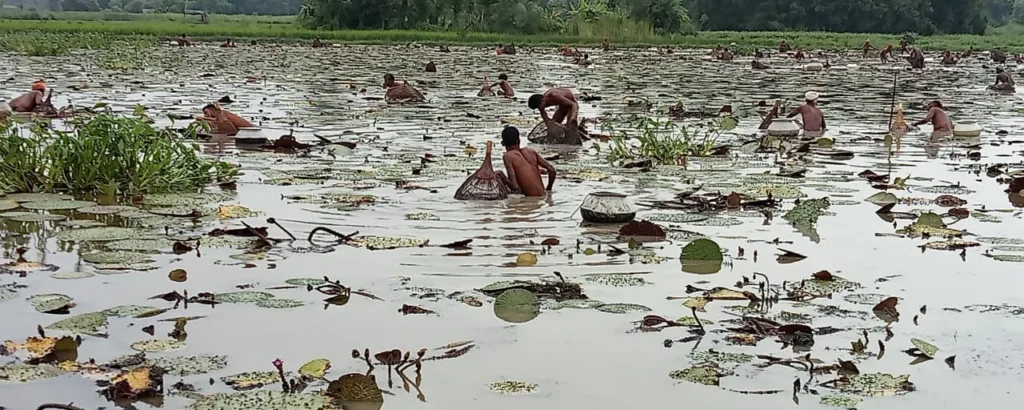
This work takes time and effort. In many traditional farming areas, farmers work directly in the water to collect the seeds.
After harvesting, the raw seeds move to the next stage: drying and processing.
3. Farmers Collect the Makhana Seeds
Farmers collect the mature seeds from the water and bring them out of the pond.
The raw seeds do not yet look like the white makhana you see in shops.
First, farmers need to dry and process them.
How Makhana Is Processed
The next part of the journey explains how makhana is made.
Farmers and processors use several steps to turn hard raw seeds into light and crunchy makhana.
4. Farmers Dry the Makhana Seeds
First, the raw seeds need proper drying.
Farmers dry the seeds before they move to the popping stage. Good drying helps prepare the seeds for further processing.
The quality of the raw seeds also affects the final product.
5. The Seeds Turn Into Popped Makhana
Now comes one of the most important steps.
Processors heat the dried makhana seeds using traditional methods. The heat makes the hard seeds pop.
As a result, the small seeds become the familiar white and crunchy makhana.
This step needs skill and care. The right heat and timing help produce good-quality makhana.
6. Workers Grade the Makhana
After popping, workers sort the makhana by size and quality.
They remove unwanted pieces and separate different grades.
Larger and well-popped pieces often fall into premium grades.
Therefore, you may see different sizes of makhana when you shop.
If you want to learn more about choosing makhana, read our [How to Choose Good-Quality Makhana – INTERNAL LINK] guide.
7. Makhana Gets Cleaned and Packed
Next, workers clean and prepare the makhana for packaging.
Food businesses then pack the product carefully to help protect its quality during storage and transport.
Finally, the packaged makhana travels from Bihar to shops, online stores and homes across India.
Why Is Bihar Famous for Makhana
Bihar has a long history of makhana cultivation.
The Mithila region has a particularly strong connection with this crop. Local farmers have developed valuable knowledge about growing and processing makhana over many years.
Several things make Bihar important for makhana:
- Suitable ponds and water bodies
- Traditional farming knowledge
- Experienced farmers
- Local processing skills
- A strong connection with Mithila food culture
Because of these factors, Bihar makhana has become well known across India.
Mithila Makhana and Local Food Culture
Makhana is not just a crop in Mithila. It also has a place in the region’s food traditions.
People use makhana in snacks, sweets and different recipes. Today, families across India also enjoy roasted makhana as a simple snack.
For example, you can roast it with salt and black pepper. You can also add chilli, turmeric, herbs or other spices.
Want more ideas? Visit our [Makhana Recipes – INTERNAL LINK] section.
Is Makhana a Healthy Snack
Many people choose makhana as an alternative to common snack foods.
Plain roasted makhana provides a simple base for a light snack. You can also prepare it with different spices to create different flavours.
However, the way you prepare makhana matters.
For example, adding a lot of oil, sugar or salt changes the overall nutritional profile of the snack.
Therefore, check the ingredients and nutrition information when you buy flavoured or packaged products.
How to Roast Makhana at Home
After learning how makhana is grown in Bihar, you may want to roast it at home.
The process is simple.
- Take two cups of plain makhana.
- Heat a pan on low to medium heat.
- Add the makhana to the dry pan.
- Stir it often so that it roasts evenly.
- Continue roasting until the pieces become crisp.
- Add salt, pepper or your favourite spices.
- Let the makhana cool before storing it.
You can try many flavours, including:
- Black pepper and salt
- Turmeric and chilli
- Pudina
- Garlic and herbs
- Desi masala
For a step-by-step recipe, visit our [Easy Roasted Makhana Recipe – INTERNAL LINK].
How to Choose Good-Quality Makhana
When you buy makhana, look at more than the packet.
Check the Size
Large, well-popped pieces often appeal to people looking for premium makhana.
Check the Appearance
Choose clean pieces with a consistent appearance.
Check the Texture
Fresh roasted makhana should feel crisp. Soft or chewy makhana may have lost its freshness.
Check the Ingredients
If you buy flavoured makhana, read the ingredient list and nutrition information.
Check the Storage
Keep makhana away from moisture. A dry and airtight container helps maintain its crunch.
You can also read our [Makhana Buying Guide – INTERNAL LINK] for more tips.
From a Mithila Pond to Your Home
The journey of Bihar makhana is unique.
First, farmers grow the crop in ponds. Next, they harvest the seeds and dry them. Then, processors pop, clean and grade the makhana.
Finally, businesses package the product and send it to customers.
The journey looks like this:
Pond → Growing → Harvesting → Drying → Processing → Popping → Grading → Packaging → Your Home
So, the next time you eat makhana, think about the work behind every handful.
The journey starts with farmers in the ponds of Bihar. It ends with a crunchy snack on your table.
Why Choose Mithila Fresh Makhana
Mithila Fresh aims to bring the flavours and food traditions of Mithila to customers.
Makhana connects us with the farms, ponds, farmers and food culture of Bihar.
If you want to explore our products, visit [Mithila Fresh Makhana – INTERNAL LINK] and discover the taste of Mithila.
Frequently Asked Questions About Bihar Makhana
Where Is Makhana Grown in Bihar?
Farmers grow makhana in suitable ponds and water bodies across parts of Bihar. The Mithila region has a particularly strong connection with the crop.
How Is Makhana Grown in Bihar?
Farmers grow makhana in ponds and suitable water bodies. They manage the crop as it grows, collect the mature seeds and then dry and process them.
How Is Makhana Harvested?
Farmers collect mature makhana seeds from the water. Traditional harvesting often requires them to work directly in the pond.
How Is Makhana Made?
First, farmers collect and dry the seeds. Next, processors heat the seeds and pop them. Finally, workers sort, clean and grade the finished makhana.
Why Is Bihar Famous for Makhana?
Bihar has suitable water bodies and a long tradition of makhana cultivation. In particular, Mithila has a strong connection with makhana farming and food culture.
Is Makhana the Same as Lotus Seeds?
No. Makhana comes from the Euryale ferox plant. True lotus seeds come from lotus plants, so the two are different.
How Should Makhana Be Stored?
Store makhana in a clean, dry and airtight container. Most importantly, keep moisture away from the product to help maintain its crisp texture.
Summery
The story of how makhana is grown in Bihar starts in the ponds of Mithila.
First, farmers grow the crop in water. Then, they harvest the seeds and dry them. After that, processors pop, clean and grade the makhana.
Finally, the finished product reaches homes across India.
Makhana therefore represents more than a snack. It connects consumers with the farmers, traditional knowledge and food culture of Bihar.
Discover the taste and tradition of Mithila with Mithila Fresh.